
Philosophy for kids at home: big questions in five minutes
Philosophy for kids at home means asking your child a big question with no right answer, and thinking it through together. Is it ever OK to break a promise? Can you make everyone happy at the same time? You don't need to know any philosophy. Read one short idea from a real thinker in kid words, ask the question, give everyone a turn, and let them disagree with you. Five minutes is enough.
What is philosophy for kids?
It is thinking out loud about the questions kids already ask. Why is that fair? How do you know? What makes a good friend? The idea that children can do real philosophy has a long history. In the 1970s the philosopher Matthew Lipman, with Ann Margaret Sharp, started a program called Philosophy for Children, built around a group of kids reasoning through a question together (Stanford Encyclopedia of Philosophy).
Most of that work happens in classrooms. It works just as well on a bed at night, or in the car.
Can young kids really do philosophy?
Yes, when the words are simple. A five-year-old can't explain a philosopher, but they can answer a philosopher's question. Here is one from Epictetus, a Stoic teacher who spent part of his life enslaved and was popular in his own day (Stanford Encyclopedia of Philosophy):
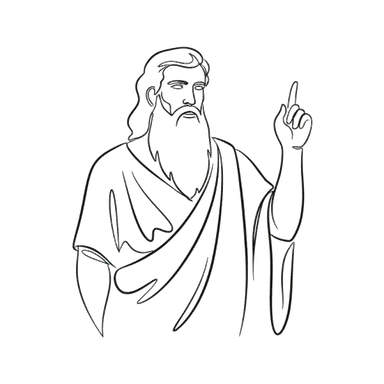
From Epictetus
You can choose some things, not all things. What part can you choose today?
Kids have strong opinions about what is theirs to choose. That is a conversation.
How do I start philosophy with my kids at home?
- Pick one short idea. A sentence from a real thinker, a fable, a small dilemma. Short enough to read in a minute.
- Say it in kid words. If the original is hard, tell it in two or three simple sentences.
- Ask one question with no right answer. Not a quiz. Something they can have an opinion on.
- Ask “why do you think that?” This is where the thinking happens. Ask it gently, and more than once.
- Give everyone a turn. Siblings, you, whoever is there. Disagreeing is allowed.
- Share your own answer last. If you go first, they may just copy you.
Does philosophy make kids smarter?
The research is mixed, and it is worth being honest about it. An earlier trial of Philosophy for Children in English primary schools, completed in 2014, found that pupils in Years 4 and 5 made about two months of extra progress in reading and maths (Education Endowment Foundation). A larger follow-up trial found no clear effect on attainment (NFER).
At home, grades are not the reason to do it anyway. The reason is the conversation: your kid thinking out loud, being taken seriously, and seeing you think too.
What are good philosophy questions for kids, and which thinkers work best?
The ones who wrote short and clear. Aesop's fables are made for it. Confucius, Epictetus and Marcus Aurelius left short sayings that turn easily into questions. Thoreau and Montaigne wrote about everyday life in ways kids can picture.

From Confucius
Say you know when you know. Say you don't when you don't. What is one thing you don't know yet?
What does philosophy at home look like in a real family?
Every Friday after the meal, my father gave us a subject. Then we all talked about it.
Everyone got a turn to talk. We felt heard. We felt together. And each of us grew our own opinions and thoughts along the way.
Nobody called it philosophy. It was just my father asking a question and taking every answer seriously. That is the whole method.
It is also the simplest way I know to be a better parent, one small moment a day.
What are good books and tools for philosophy with kids?
- Philosophy for Kids: 40 Fun Questions That Help You Wonder About Everything! by David A. White is a book of 40 questions to work through together, written for school-age kids.
- Big Ideas for Curious Minds by The School of Life introduces big thinkers to kids through short chapters you can read together.
- The Prindle Institute's Teaching Children Philosophy has nearly 300 discussion guides you can read online, built around children's books.
- Tovana helps parents and kids feel close, one short moment a day: a big idea from a real thinker and a question you answer together.
If you want more question ideas, here are questions to ask your kids that get more than “fine”.
Questions parents ask
What age can kids start philosophy?
There is no set age. Even young kids can answer a big question when the words are short and the question is concrete. Can you make everyone happy at the same time? Is it ever OK to break a promise? Older kids can take the same questions further, argue with them and give reasons.
Do I need to know philosophy to do this with my kids?
No. Your job is to ask and listen, not to teach. Read one short idea, ask one question, and keep asking why they think what they think. Saying "I'm not sure, what do you think?" is a good answer for a parent. Kids like seeing grown-ups think out loud.
What are good philosophy questions for kids?
Questions with no right answer that they can picture. Is it fair if everyone gets the same, even if someone needs more? Can you be brave and scared at the same time? What is one thing you don't know yet? Simple words, big idea, and room to disagree.
What if my child gives a "wrong" answer?
In philosophy there usually isn't one. Ask why they think so, and share your own answer as just another view. If they change their mind, great. If they don't, that is fine too. The point is that they think it through and feel heard, not that they agree with you.
How long should a philosophy talk with kids take?
Five to ten minutes is plenty at home. One idea, one question, a few turns each. Stop while it is still fun. A short talk most days builds the habit better than a long one that feels like school, and it leaves them wanting the next one.
Also on paper: What Do You Think?, one big idea a day for the family, on Amazon.