
Things to talk about with kids when you don't know what to say
Good things to talk about with kids are things they can have an opinion on: their friends, what is fair, a small dilemma, a short story with a twist, a big idea told in simple words. Bring one topic, tell it in a few sentences, and ask what they think. Then listen, share your own view, and let them disagree. A topic in your pocket is what turns “so…” into a conversation.
Why is it hard to know what to talk about with my kids?
Because most of what we say to kids is logistics. Shoes, homework, bedtime, hurry up. By the time there's a quiet moment, there's nothing left to say except “how was your day”, and that usually gets “fine”.
It isn't that you have nothing to say. It's that the day doesn't hand you a topic. So bring one.
What are good things to talk about with kids?
- Friends. What makes someone a good friend? Is it OK to have more than one best friend?
- Fairness. Is it fair if everyone gets the same, even if someone needs more?
- Small dilemmas. You find a toy on the playground. Do you keep it, leave it, or ask around?
- Short stories with a twist. A fable takes a minute to tell and gives you a whole talk.
- What they noticed. Something strange, funny or kind they saw today.
- You. Something you got wrong once, or changed your mind about. Kids love hearing that grown-ups are still figuring things out.
- Big ideas. Courage, honesty, happiness, what makes a good life. Kids can handle them when the words are simple.
If you want ready-made questions, here are questions to ask your kids that get more than “fine”.
How do I talk with my child and start a real conversation?
Tell something short, then ask. Here is a fable from Aesop. Two tired travelers rested in the shade of a big tree and complained that it was useless, because it gave no fruit. The tree answered that they were lying in its shade while they said it (Aesop's Fables, “The Travelers and the Plane-Tree”). Thirty seconds to tell. Then:
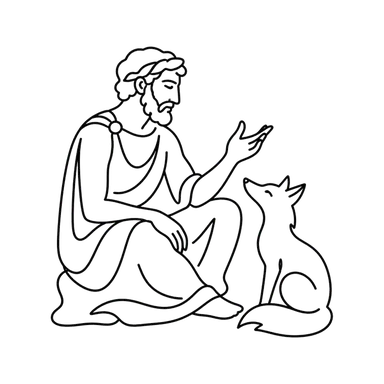
From Aesop
What good thing do you forget to notice each day?
Answer it yourself too. Your answer might be them.
How do I keep a conversation with my kid going?
- Ask “why do you think that?” It's the most useful question there is. Ask it gently.
- Don't correct the opinion. If you disagree, say what you think as one more view, not the right answer.
- Give everyone a turn. Siblings too. The quiet one often has the best answer.
- Follow where they take it. If a fable about a tree turns into a story about school, go there.
- Stop while it's still good. Then they want the next one.
This back and forth is what matters. The Harvard Center on the Developing Child calls it “serve and return”: responsive, back-and-forth exchanges between a young child and a caring adult, which help build and strengthen neural connections in the child's brain (Harvard Center on the Developing Child).
What are good things to talk about with older kids and teens?
The same topics, taken further. Older kids want to be treated like their opinion counts, because it does. Friendship is a good one at any age. Mary Wollstonecraft wrote that friendship is the most serious kind of affection, because it rests on principle and grows over time (A Vindication of the Rights of Woman, ch. 4).

From Mary Wollstonecraft
Good friends stay because of trust. What makes a friendship strong?
A teenager may answer with one word. That's fine. Ask once, answer it yourself, and leave it. Sometimes the real answer comes two days later in the car.
Where do good topics come from in a real family?
Every Friday after the meal, my father gave us a subject. Then we all talked about it.
He still does it today. When I come over with my kids, they're part of it now.
I wanted that feeling for my own kids. I couldn't do it like him.
Quotes were too short. One line and there's nothing left to talk about. Books and podcasts were too long for the few minutes we actually get together.
I wanted something in the middle. One sharp idea I can read in a few minutes, explain to my kids in plain words, and turn into a real conversation.
That's why I built Tovana: one idea in plain words and a question for everyone, ready for the few minutes you actually get. For where those minutes come from, see what actually counts as quality time with kids. If you're looking for where to fit the conversation, start with a few present minutes a day. If the ideas are what pull you in, here is philosophy for kids at home.
Questions parents ask
What should I talk about with my kids?
Things they can have an opinion on. Their friends, what is fair, what they would do in a small dilemma, a short story with a twist, something they noticed today. Big ideas work too, when the words are simple. The best topic is one where you are curious about their answer, not checking if they got it right.
What do I talk about with my kid when I don't know what to say?
Bring one thing in from outside. A short fable, an idea from a real thinker, something you read and are still thinking about. Tell it in two or three sentences, then ask what they think. Having a topic in your pocket takes the pressure off both of you.
How do I talk with my child so they actually listen?
Talk less and ask more. Kids tune out lectures and lean in to questions they get to answer. Keep it short, sit side by side if face to face feels like a test, and take their answer seriously, even when you disagree. Listening well is the fastest way to be listened to.
What can I talk about with a young child?
Short and concrete. Something they saw today, a friend, a small what-would-you-do, a fable that takes a minute to tell. Ask one question, wait, and take their answer seriously. Little kids love big ideas when the words are small.
What are good things to talk about with a teenager?
Fairness, friendship, what they would change about the world, a choice someone made in the news or a show, something they changed their mind about. Treat them like someone whose opinion counts. Share yours as just another view, and don't turn it into a lesson.
How long should a conversation with my kid be?
Shorter than you think. Five minutes where everyone gets a turn is a real conversation. Stop while it's still good, and it is easier to start again tomorrow. If they want to keep going, let them lead.
Also on paper: What Do You Think?, one big idea a day for the family, on Amazon.